Cricket authorities are considering a proposal to replace the traditional red ball with a pink ball in Test matches, aiming to reduce interruptions caused by poor lighting and extend playing hours. This idea has been discussed by the International Cricket Council (ICC)’s cricket and chief executives committees, with further deliberations planned at the ICC board meeting in Ahmedabad this weekend.

If these discussions lead to approval, the new rules could be implemented in time for Australia’s upcoming home Test series against New Zealand and England, as well as tours of South Africa and India. The ICC has not yet responded to requests for comment, while Cricket Australia has chosen not to provide any official statement on the matter.
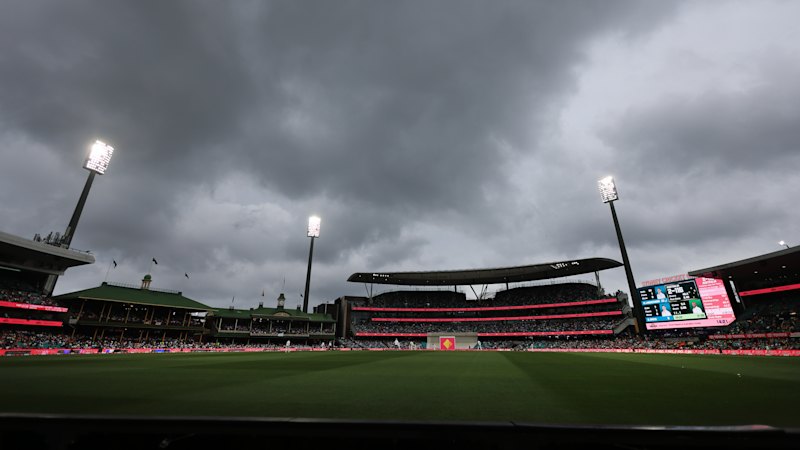
Todd Greenberg, the chief executive of Cricket Australia, has been a strong proponent of exploring ways to keep players on the field even in low-light conditions. His push comes largely from the frequent disruptions caused by bad light during recent Test matches in Sydney, including the fifth Ashes Test in January, which was cut short by more than a session. Similar issues have occurred in Tests against Pakistan in 2024 and South Africa in 2023.
Greenberg expressed his frustration with the current situation during an interview on SEN Radio in January. “There’s a lot of things I get frustrated with in cricket, bad light’s one of them,” he said. “I caution those remarks against the remarks of players who said they couldn’t pick the ball up and it was really dark and those sorts of things. But I get frustrated that we don’t have a solution to this problem.”
He emphasized the need for change while acknowledging the importance of player safety. “We’re in the entertainment business. I can’t think of another business that continues to walk off in front of its fans. Again, I preface that by saying it has to be safe for the players, clearly, but we’ve got big light towers here and we’ve got technology. I’m sure there’s a way we can make our way through it.”
Tony Shepherd, former chair of Venues NSW, echoed similar sentiments in 2024, stating that stopping play due to bad light was “bullshit.” He suggested switching to a pink ball to keep the game going.

The proposed rule change would allow the use of a pink ball under lights if both teams agree before a series. However, it remains unclear whether day-night Tests, currently played with a pink ball throughout, would revert to using a red ball during daylight hours.
This potential adjustment is likely to generate mixed reactions from players, many of whom remain skeptical about the pink ball’s performance. Usman Khawaja, a former Test opener, expressed concerns about switching between pink and red balls in 2024. “If it is, I’m retiring,” he said. “The red ball is so distinct. I’ve played white-ball, pink-ball, and red-ball. They all react so differently. Nothing reacts like that red ball.”
Khawaja added that the red ball is deeply tied to the tradition of Test cricket. “The red ball is what we grew up playing with. The red ball is Test cricket, right? So unless you can find a way to replicate the sun, the lights aren’t the same. The lights shining on a red ball is still really hard to see, whereas a pink ball is a lot better, but it doesn’t react the same as red.”
Justin Langer, former Australian coach, acknowledged the need to balance player concerns with the broader interests of the game. “It is so frustrating, and I’ve walked in all the shoes as a player and as a batsman, and you think you want to be off because you want perfect conditions and then as a coach you want what’s best for your team,” he said in 2024. “But when you look at the big picture, it is crazy that these guys aren’t playing Test cricket here. It’s not great for the game of cricket this is happening right now.”
Meanwhile, Mitchell Marsh, the white-ball captain, has been ruled out of the Pakistan ODI series due to an ankle injury sustained during the Indian Premier League. Josh Inglis will take charge of the team in Marsh’s absence, with the latter flying back to Perth. It is uncertain whether Marsh will be fit for the second leg of the tour in Bangladesh.