Addressing the Diphtheria Outbreak in Western Australia
Health authorities in Western Australia’s far north are working to combat disinformation and misconceptions as part of a vaccination drive aimed at controlling an ongoing diphtheria outbreak. The situation has prompted action from both state and federal governments, following a rise in cases across WA, the Northern Territory, and Queensland. At least one death has been linked to this respiratory condition, highlighting the urgency of the response.
According to the latest figures from the WA Department of Health, there have been 92 reported cases of diphtheria. Two prisoners from West Kimberley Regional Prison have recovered from the infection, and health officials state that the prison outbreak is now under control. Other historical cases are being managed through contact tracing and the broader vaccine rollout.
Dr Alice Fitzgerald, a doctor with Wunan Health, emphasized that diphtheria can be life-threatening if left untreated and is disproportionately affecting Indigenous communities. “Probably more than 90 per cent of cases are in that population group,” she said. She added that the majority of cases in the Kimberley region have been reported in towns like Derby and Kununurra, as well as nearby remote communities.
In the Northern Territory, where a man has died from diphtheria, the number of cases has been decreasing since tens of thousands of vaccinations were administered. However, the challenge of combating disinformation remains significant.
The Challenge of Disinformation
Diphtheria is extremely rare, and it had not been detected in the Kimberley region for half a century before the current outbreak. Socio-economic pressures and limited access to healthcare in some remote communities have contributed to the rapid spread of the disease. Dr Fitzgerald stressed that the best prevention is vaccination. “We’re seeing cases throughout people who are either unvaccinated or vaccinated a long time ago,” she said. “Luckily, the diphtheria booster is a common vaccine that’s easily accessible.”
However, the re-emergence of diphtheria after decades of dormancy has made fighting disinformation a challenge. “Because diphtheria is not a disease we’ve seen in the Kimberley for many years, even medical practitioners are taking some time to catch up,” she said. “It does really highlight the importance of keeping the community really vigilant about vaccine-preventable diseases.”
Community Response and Concerns
Kununurra residents have expressed confusion about the symptoms and causes of the bacterial infection. Many did not know how it spreads or whether they could get vaccinated. Some have shown scepticism towards vaccines and the effectiveness of western medicine. Others are concerned that this “disease of the past” has returned to the Kimberley.
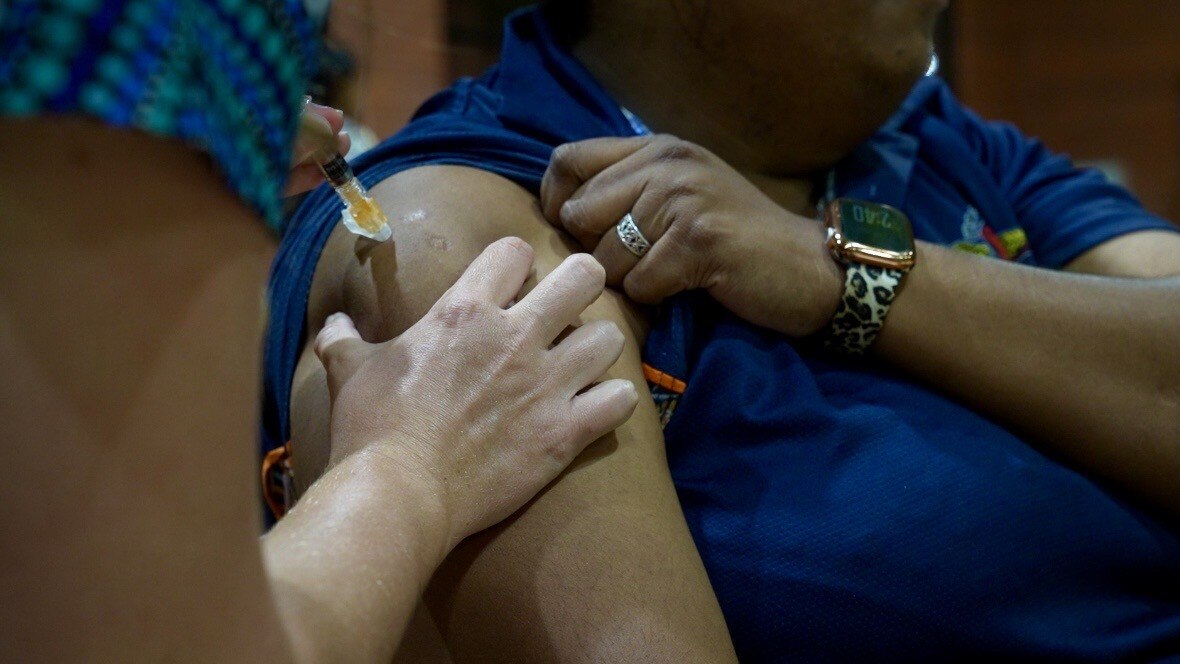
A pop-up vaccination clinic was open at the leisure centre in Kununurra, with dozens of people lining up to receive free diphtheria and flu vaccines. Miriwoong woman Dolly Thompson, who did not know much about the communicable disease, decided to attend the clinic after speaking to a nurse handing out flyers at the local supermarket. She got the jab to “keep safe” and plans to encourage her family members to do the same. “I’m going to tell them to come to Coolibah Centre,” she said.
Kununurra mother Yoska Lindsay took her daughters to the pop-up clinic to get vaccinated because she was concerned about the current outbreak. “I’m here because I think it’s really important to protect my children against the flu and diphtheria with the local outbreak,” she said. “It’s really important that as many people as possible do their bit for the community. It’s great seeing so many people here today.”
A First Line of Defence
The health minister, Meredith Hammat, stated that the state government has been working with the Kimberley, Pilbara, and Goldfields communities since the first cases were detected. She encouraged people to get vaccinated to avoid the impacts of diphtheria. “Our first line of defence is again to encourage people to get access to vaccinations,” she said. “It’s a vaccine-preventable disease, and we continue to monitor that situation closely.”